YK Orthopedics provides advance latest medical technologies and a treatment approach that puts patients first. They ensure accurate diagnoses, precise surgical interventions and personalized rehabilitation programs for complete recovery.
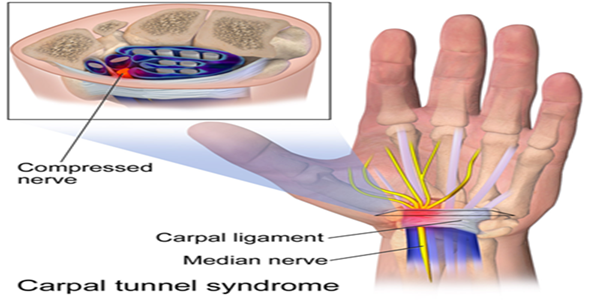
Carpal Tunnel Release Surgery is done to ease pressure on the median nerve. That nerve runs through a small tunnel in your wrist. It shares space with tendons that help your fingers move. If the space gets tight or swollen, the nerve feels squeezed. That pressure can cause pain or tingling. Many feel it in the thumb, index, or middle fingers. You might drop things often. Even lifting a cup can be hard. Buttons or zippers become a task.
Doctors try other options first. Braces, injections, rest. If those don’t work, surgery may be the answer. In surgery, a small cut is made. A ligament is released. This gives the nerve more room. It’s a short procedure. Many go home the same day. Over time, the pain goes down. Feeling comes back. Grip improves. Tasks feel normal again.
When done by trained hands, it’s safe and quick. But most of all, it helps. Life feels better when your hand works the way it should.

The Carpal Tunnel Surgery cost in Gurgaon isn’t fixed. It depends on a few things. Type of hospital. Kind of surgery—open or endoscopic. How complex your case is. Any other health issues can also affect the cost.
At a regular multi-specialty hospital, prices usually begin around ₹30,000. For more advanced cases, or if both hands need treatment, it can go up to ₹1,00,000
Note: These figures can shift. Final cost depends on your test results, the hospital’s pricing, and your surgeon’s judgment.
| Type of Procedure | Approximate Cost (INR) |
|---|---|
| Non-Surgical (Medication + Physiotherapy) | ₹15,000 – ₹30,000 |
| Core Decompression Surgery | ₹1,50,000 – ₹2,50,000 |
| Core Decompression with Bone Grafting | ₹1,50,000 – ₹2,50,000 |
| Core Decompression with Bone Marrow Aspirate | ₹2,50,000 – ₹3,00,000 |
| Bone Grafting | ₹2,00,000 – ₹3,00,000 |
| AVN Hip Replacement Surgery | ₹2,50,000 – ₹4,50,000 |
| Advanced AVN Therapy (PRP, etc.) | ₹30,000 – ₹75,000 |
| AVN Total Hip Replacement | ₹3,00,000 – ₹4,00,000 |
| AVN Ceramic Hip Replacement | ₹4,00,000 |
There are two main ways this surgery is done. Each has its own process. The choice depends on your condition and what your doctor thinks is best.
1. Open Carpal Tunnel Release Surgery
This is the older and more common method. The doctor makes a small cut on your palm. Through that, the ligament is gently cut to ease pressure on the median nerve.It’s simple and direct. Firstly, the surgeon can see the area, as that makes it easier to handle any issues right away. Many doctors prefer this for severe or tricky cases.
2. Endoscopic Carpal Tunnel Release Surgery
This one uses a tiny camera. A small cut is made near the wrist. The camera goes inside and shows everything on a screen. The surgeon then cuts the ligament using special tools.
This way, the cut on the skin is smaller. Recovery is usually quicker. Some people also get less scarring. But it’s not right for everyone. If the nerve is badly compressed, open surgery might still be safer.
Both methods are done with local or regional numbing. You’ll stay awake but won’t feel pain. The doctor will help choose the best option for your case.

Most people feel a big change after surgery. They can sleep better, work better, and feel less frustrated.

Most of these issues go away on their own. Some need a bit of therapy or rest. But serious problems are rare.
Picking the right surgeon makes a big difference. Dr. Chandeep singh is among the Best Carpal Tunnel Surgeons in Gurgaon. With the right care, most people recover well and avoid these risks altogether.
It always begins with a good clinical check-up. The doctor will ask about your symptoms. How long they’ve lasted. What daily tasks have become harder? Details matter.
Two simple tests are often done. In Phalen’s test, you bend your wrist. If that causes tingling or pain, it’s a clue. In Tinel’s sign, the doctor gently taps over your wrist. If it sends a small electric shock feeling into your fingers, the nerve may be irritated.
Then comes testing. A nerve conduction study is key. It checks how well signals move through the median nerve. If signals are delayed or weak, that’s a sign of trouble. Sometimes, an EMG is done too. That looks at how well the muscles are working.
In some cases, imaging may help. An ultrasound or MRI can spot other issues, like cysts, arthritis, or swollen tendons.
Once everything is clear, your surgeon will decide what’s next. It’s not rushed. Surgery is only considered if needed. If other options are still worth trying, they’ll be discussed first.

Healing usually starts the same day. Some people feel relief from pain just hours after the surgery. A bandage is kept on for a few days. Stitches are taken out in 10 to 14 days.
Tingling often fades in the first week. Numbness may take longer, especially if the nerve was under pressure for a long time.
You might wear a soft brace for a few days. Light movement is encouraged early. Hand therapy often begins soon after. It helps with motion and keeps the wrist flexible.
Office work is okay in about a week. Some return even sooner. Jobs with lifting or heavy tools might need 2–3 more weeks. Grip strength takes time. It builds back slowly.
The most important thing? Stick to the plan. Do your hand exercises. Go for follow-ups. Listen to your doctor.
That’s what brings a full, smooth recovery.
It’s a simple fix with real results.
At YK Orthopaedics, you’re treated with honesty and care from day one.
We’re more than just a clinic. We’re here to help you feel whole again.
If you’re looking for the best doctor for Carpal Tunnel Surgery, you’re already close.
An orthopaedic doctor specializes in diagnosing and treating conditions related to bones, joints, muscles, ligaments, and the spine.
You should consult an orthopaedic doctor if you experience joint pain, back pain, fractures, swelling, or difficulty in movement.
Knee pain is commonly caused by arthritis, ligament injuries, overuse, or age-related wear and tear.
Treatment depends on the cause and may include medication, physiotherapy, lifestyle changes, or in some cases, surgery.
Avoid moving the injured area and seek immediate medical attention for proper diagnosis and treatment.
Arthritis is a condition that causes inflammation in the joints, leading to pain, stiffness, and reduced mobility.
No, most orthopaedic conditions can be treated with non-surgical methods like medication and physiotherapy.